
As men age, a condition called benign prostatic hyperplasia (BPH) becomes increasingly common. BPH affects the prostate gland, causing it to enlarge and potentially leading to lower urinary tract symptoms (LUTS). These symptoms can include difficulty urinating, frequent urination, and a weak urine stream.
Dr. Khizar Hayat is a urologist with extensive experience in treating BPH. He tailors treatment plans based on the severity of your symptoms and the specific condition of your prostate. Treatment options may include:
Lifestyle changes: For mild BPH, simple adjustments like reducing caffeine intake or limiting fluids before bedtime can make a significant difference. Medication: Medications can help relax the prostate muscles or shrink the prostate gland, improving urine flow. Minimally invasive procedures: In some cases, minimally invasive procedures like Rezum can be used to address BPH with minimal recovery time. Surgery: For severe BPH, traditional surgeries like TURP may be considered.Dr. Hayat will work with you to determine the best course of action for your individual needs.

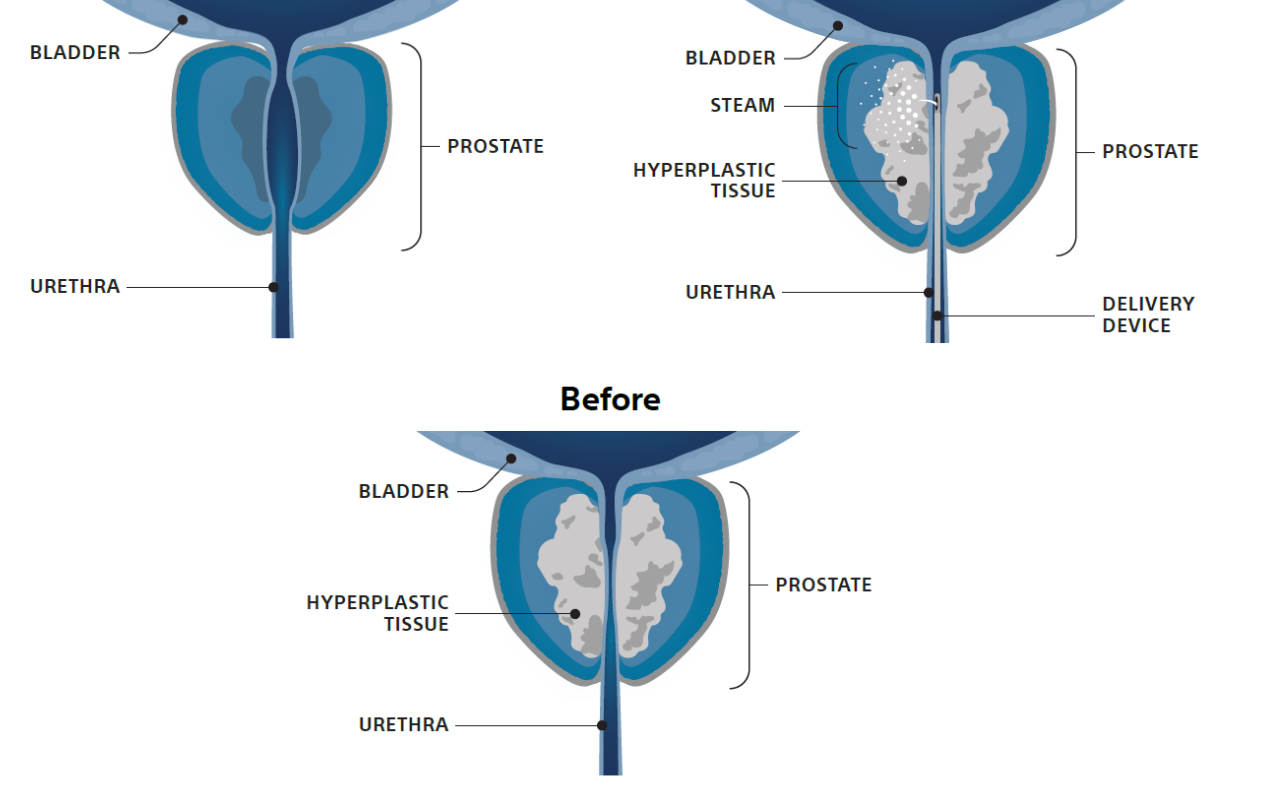
Rezūm Water Vapor Therapy, a minimally invasive procedure, uses the natural energy stored in sterile water vapor (steam) to treat BPH. Clinical studies have shown a positive safety profile for Rezūm, with the ability to relieve symptoms associated with an enlarged prostate.
During each 9-second treatment, the doctor delivers sterile water vapor throughout the targeted prostate tissue. When the steam condenses back into water, the stored energy is released, causing targeted cells to die. Over time, your body’s natural healing response removes these dead cells, shrinking the prostate and opening the urethra. This allows for improved urinary flow and relief from BPH symptoms.
Most patients begin to experience some symptom relief within as soon as two weeks, with maximum benefit typically occurring within three months. However, individual responses can and do vary. The number of water vapor treatments you need depends on the size and condition of your prostate, which Dr. Hayat will determine during your consultation. The entire procedure can be completed in one appointment.
It’s important to note that the images provided are for illustrative purposes only and may not represent the exact outcome for every patient.
• Your doctor may stop anticoagulants (blood thinners) a few days to a week prior to your procedure.
• Antibiotics may be prescribed.
• Your doctor will discuss any pain medications that will be used.
• Your doctor may stop anticoagulants (blood thinners) a few days to a week prior to your procedure.
• Antibiotics may be prescribed.
• Your doctor will discuss any pain medications that will be used.
• After your procedure, continue oral antibiotics as prescribed by your doctor.
• Your doctor may recommend a catheter for a few days to ease urination
during healing.
• Avoid activities that may irritate your prostate. Consult your doctor for
specific recommendations.
• If you experience discomfort:
– Take a mild pain medication, as recommended by your doctor.
– Try a warm bath or sitting on a hot water bottle.
– Consider temporarily removing caffeine, chocolate and alcohol from your diet.

Dr. Khizar Hayat Gondal, Urologist in Lahore.


